Sacrifice for loved ones and moral freedom
Crime and PunishmentSacrifice for loved ones and moral freedom connects two acts of self-denial made under economic pressure: Sofya Semyonovna Marmeladova is driven into prostitution to support her destitute family, while Avdotya Romanovna Raskolnikova agrees to marry Pyotr Petrovitch Luzhin in a bid to secure the future of her mother and brother. Rodion Romanovitch Raskolnikov recognizes both as sacrifices of personal freedom, but their different circumstances expose the moral cost of treating a person’s life as something that can be exchanged for another’s survival or comfort.
Sacrifice under pressure
The idea first emerges in Semyon Zaharovitch Marmeladov’s account of his daughter’s Yellow ticket. He describes himself as having nowhere else to turn: even though he expects a respectable citizen to refuse him money, he goes to ask because, as he explains, everyone must have somewhere to go. He links that appeal directly to the moment when his daughter first went out with a Yellow ticket. The need to seek help and the daughter’s loss of a viable place within the family belong to the same landscape of desperation.
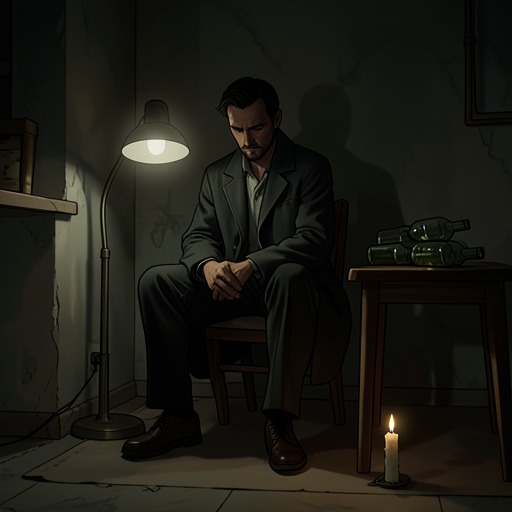
Marmeladov’s story makes clear that the family’s need is not abstract. The children are hungry, and Katerina Ivanovna, ill and distraught, reproaches Sofya Semyonovna for living with them without contributing. Marmeladov admits that he was lying drunk while this happened. Darya Frantsovna, a woman known to the police, had already tried several times to reach Sofya Semyonovna through the landlady. In that setting, the appeal to sacrifice is neither an unpressured choice nor a simple declaration of virtue: it arises amid hunger, illness, a father’s drunken inaction, and an outside pressure directed at the daughter.
Sofya Semyonovna’s imposed sacrifice
Marmeladov recalls hearing Sofya Semyonovna ask whether she really had to do what was being demanded of her. Katerina Ivanovna answered harshly, but he asks that she not be blamed: in his account, illness and the crying of hungry children had driven her to distraction, and her words were meant to wound. The scene binds the daughter’s impending action to a family crisis in which desperation itself damages the relationships it is trying to preserve.
At six, Sofya Semyonovna put on her kerchief and cape and left. At about nine, she returned and silently placed thirty roubles on the table before Katerina Ivanovna. She did not explain herself or look at her. Instead, she covered her head and face with the family’s large green drap de dames shawl and lay facing the wall, her shoulders and body shuddering. The money answers an immediate material need, but the silence and her physical distress make the cost visible without presenting the act as freely chosen or emotionally resolved.
Katerina Ivanovna then went to the little bed and remained on her knees, kissing Sofya Semyonovna’s feet through the evening. The two women eventually fell asleep in each other’s arms; Marmeladov, still drunk, had watched without getting up. He says that after an unfortunate incident and information supplied by ill-intentioned people, with Darya Frantsovna taking a leading part, his daughter was forced to take a Yellow ticket and could no longer live with the family. The episode therefore has two consequences: Sofya Semyonovna’s money reaches her household, but the means of obtaining it leads to her exclusion from that household.
Avdotya Romanovna’s proposed marriage
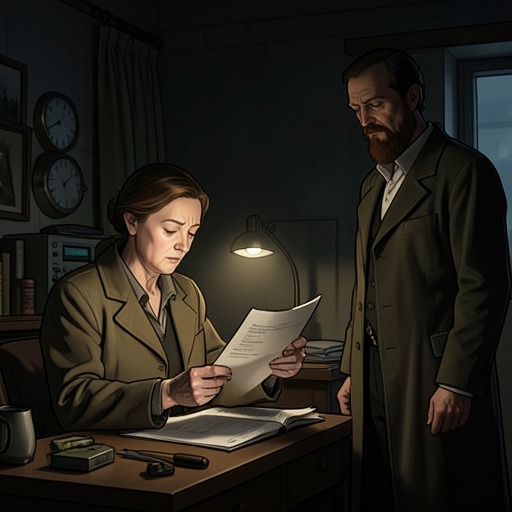
In his thoughts about his mother’s letter, Rodion Romanovitch Raskolnikov applies the same moral concern to his sister’s agreement to marry Pyotr Petrovitch Luzhin. He recalls that Avdotya Romanovna could endure hardship, yet refuses to believe that she would surrender her dignity merely for comfort. He suspects that Luzhin’s theory of the advantage enjoyed by a wife raised from destitution and indebted to her husband’s generosity was not an accidental indiscretion, but an early statement of the relation he expects marriage to establish.
Raskolnikov’s interpretation is that Avdotya Romanovna is not sacrificing herself for her own ease. She is doing so for the people she loves: her brother and their mother. He imagines the advantages the marriage might bring him, including remaining at university, entering a business partnership, and securing a prosperous and respected future. That imagined benefit sharpens his alarm: the person whose future appears to be purchased is himself, while his sister is the one expected to pay.
He also connects his mother’s partial, loving concern for her firstborn with the family’s financial dependence. Their hundred-rouble pension is insufficient, and they borrow from the Svidrigailovs as well as from Afanasy Ivanovitch Vahrushin. Raskolnikov rejects the idea that a promise of future repayment, after he finishes his studies and obtains a post, can justify Avdotya Romanovna’s present sacrifice. His question is practical as well as moral: what can he do now, rather than later, to give her a reason not to bind herself to Luzhin?
Freedom, dignity, and unequal choices
Raskolnikov places Avdotya Romanovna’s proposed marriage beside Sofya Semyonovna’s prostitution, arguing that neither woman should have to trade away moral freedom for the needs of others. He insists that the outwardly more respectable bargain may be no better—and perhaps worse—than the sacrifice made under immediate starvation. In his account, Luzhin’s offer entails a continuing life with a man Avdotya Romanovna does not respect; Sofya Semyonovna’s choice is made in the face of hunger. Their circumstances are not interchangeable, but both expose a society in which women’s futures can be treated as resources for family survival or advancement.
The comparison also reveals the tension in Raskolnikov’s response. He protests that he will not accept his sister’s sacrifice, yet recognizes that he is currently living on support drawn from the very family whose sacrifice he condemns. His appeal to freedom therefore includes a demand on himself: he cannot simply forbid Avdotya Romanovna’s choice without offering a credible alternative. The episode leaves the conflict unresolved, but makes its terms explicit—love can inspire self-denial, while need can constrain it, and a declared willingness to sacrifice does not by itself settle whether the sacrifice is just or bearable.